


AED 375,000. That is the line between 0% and 9% corporate tax in the UAE, and a surprising number of free zone founders cross it without noticing. But the Dubai vs Singapore vs Hong Kong decision is not purely about where that threshold sits. It is about which jurisdiction aligns your corporate structure, your personal residency, your banking setup, and your compliance burden into a coherent whole. Get one element wrong and the savings in one column disappear into costs in another.
The Dubai vs Singapore vs Hong Kong comparison matters because these three jurisdictions have converged on the same target market (international entrepreneurs, digital businesses, regional holding structures) while offering structurally different answers.
Dubai trades administrative simplicity and zero personal income tax for tightening substance requirements. Singapore trades a higher corporate rate for institutional credibility and a direct visa pathway. Hong Kong trades minimal bureaucracy and a clean offshore exemption for political uncertainty and a banking environment that has grown more selective. You will not see these trade-offs in the headline numbers alone.
Tax comparison: Dubai FZE vs Singapore Pte Ltd vs Hong Kong Limited
Corporate tax rates and thresholds
The UAE introduced a federal corporate tax effective for financial years starting on or after 1 June 2023. The rate structure is marginal: 0% on taxable income up to AED 375,000, then 9% on the excess above that threshold, per the UAE Federal Tax Authority. For a Dubai free zone entity that qualifies as a Qualifying Free Zone Person (QFZP), the regime is different: 0% on qualifying income, and 9% on non-qualifying income from the first dirham (no AED 375,000 benefit on the non-qualifying portion).

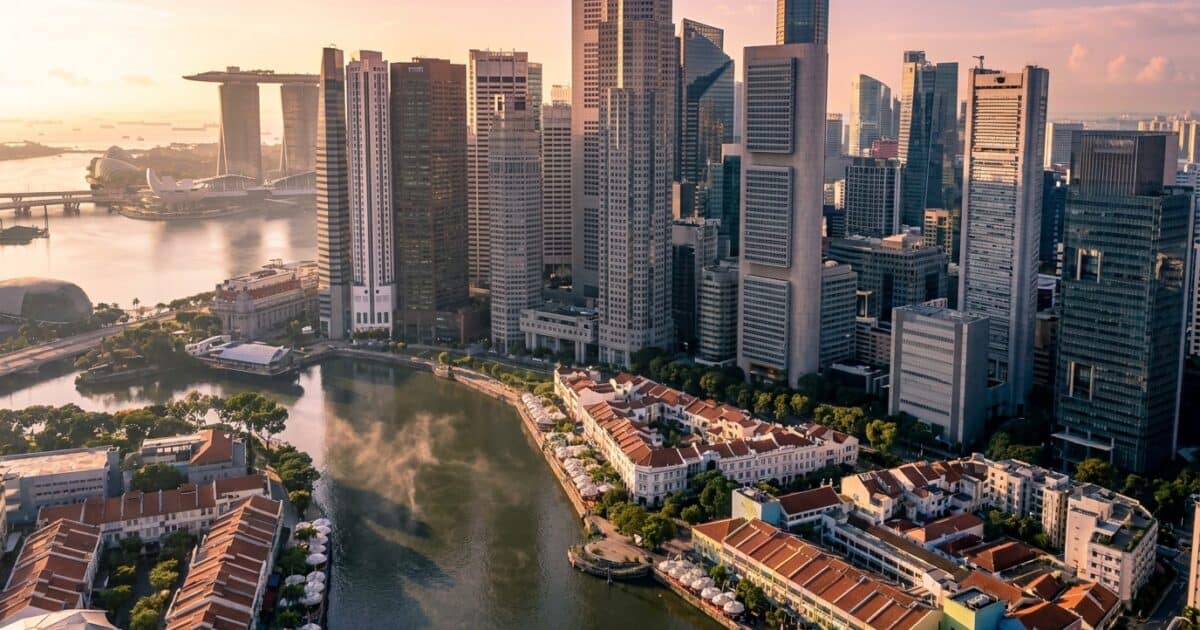
Singapore’s headline rate is 17%, per IRAS, though rebates and reliefs are revisited each year, most recently in Singapore’s 2026 Budget. That number looks punishing next to Dubai, but the effective rate for early-stage companies is far lower. The Startup Tax Exemption (SUTE) provides a 75% exemption on the first S$100,000 of chargeable income and 50% on the next S$100,000 for the first three consecutive Years of Assessment, bringing effective tax on the first S$100K to roughly 4.25%. Eligibility requires the company to be Singapore-incorporated, Singapore tax-resident (control and management exercised in Singapore), have no more than 20 shareholders, and at least one individual shareholder holding 10% or more of issued ordinary shares. Investment holding companies and property developers are excluded.
The CIT Rebate for YA 2026 (50% of tax payable, capped at S$40,000 combined with cash grant) reduces the first-year burden further.
Hong Kong uses a two-tier structure: 8.25% on the first HKD 2 million of assessable profits, 16.5% on the remainder, per the Inland Revenue Department. Hong Kong taxes only profits arising in or derived from Hong Kong. Offshore profits, where the operations test confirms the income is not sourced in Hong Kong, fall outside the charge entirely.
VAT, capital gains, and dividend taxation
| Tax metric | Dubai FZE (QFZP) | Singapore Pte Ltd | Hong Kong Limited |
|---|---|---|---|
| Corporate tax rate | 0% on qualifying income; 9% on non-qualifying | 17% headline; effective ~4.25% (SUTE, Y1-3) | 8.25% on first HKD 2M; 16.5% on excess |
| VAT / GST | 5% VAT (most supplies) | 9% GST (registered businesses) | None |
| Capital gains tax | None | None | None |
| Dividend WHT | None | 0% (one-tier system, resident and non-resident) | None |
| Personal income tax | None | Progressive to 24% on income above S$1M | Progressive to 17%; standard rate 15%/16% |
Hong Kong stands out for what it does not charge: no VAT, no GST, no capital gains tax, no dividend tax, no withholding on dividends, per the IRD’s individual tax overview. The only levy is profits tax, and even that only applies to Hong Kong-sourced income.
Small business relief
The UAE’s Small Business Relief allows businesses with revenue not exceeding AED 3 million per relevant tax period to elect for 0% corporate tax, available for tax periods ending on or before 31 December 2026, per the FTA Small Business Relief decision. This means a Dubai FZE that does not qualify as a QFZP (or whose qualifying income is uncertain) can still pay zero tax if revenue stays under AED 3 million during this window.
Singapore’s SUTE window runs three consecutive Years of Assessment from incorporation, regardless of profitability in those years. After SUTE expires, the company transitions automatically to the Partial Tax Exemption (PTE), which provides 75% relief on the first S$10,000 and 50% on the next S$190,000 of normal chargeable income indefinitely. Hong Kong has no equivalent formal startup relief, but the 8.25% first-tier rate functions as a structural benefit for any profitable company below HKD 2 million in assessable profits.
Corporate structure, formation, and ongoing compliance
Formation requirements and director residency
All three jurisdictions permit 100% foreign ownership without mandatory local shareholding (in non-regulated sectors), per the UAE Government Portal, the Singapore Economic Development Board, and InvestHK. The director residency rules diverge significantly, however.
Singapore requires at least one director who is ordinarily resident in Singapore (a citizen, permanent resident, or certain work pass holder), per ACRA. A company secretary must be appointed within six months of incorporation, must be ordinarily resident in Singapore, and the sole director cannot double as secretary. Since 9 June 2025, under the Corporate Service Providers Act 2024, nominee director appointments made by way of business must go through ACRA-registered CSPs. Market rates run S$1,200 to S$3,000 per year. The nominee director compliance framework in Singapore is more regulated than most founders expect.
Hong Kong requires at least one natural person director, plus a company secretary who must be a Hong Kong resident or a locally licensed corporate service provider, with a registered office address in Hong Kong, per the Companies Registry. There is no requirement for any director to be a Hong Kong resident.
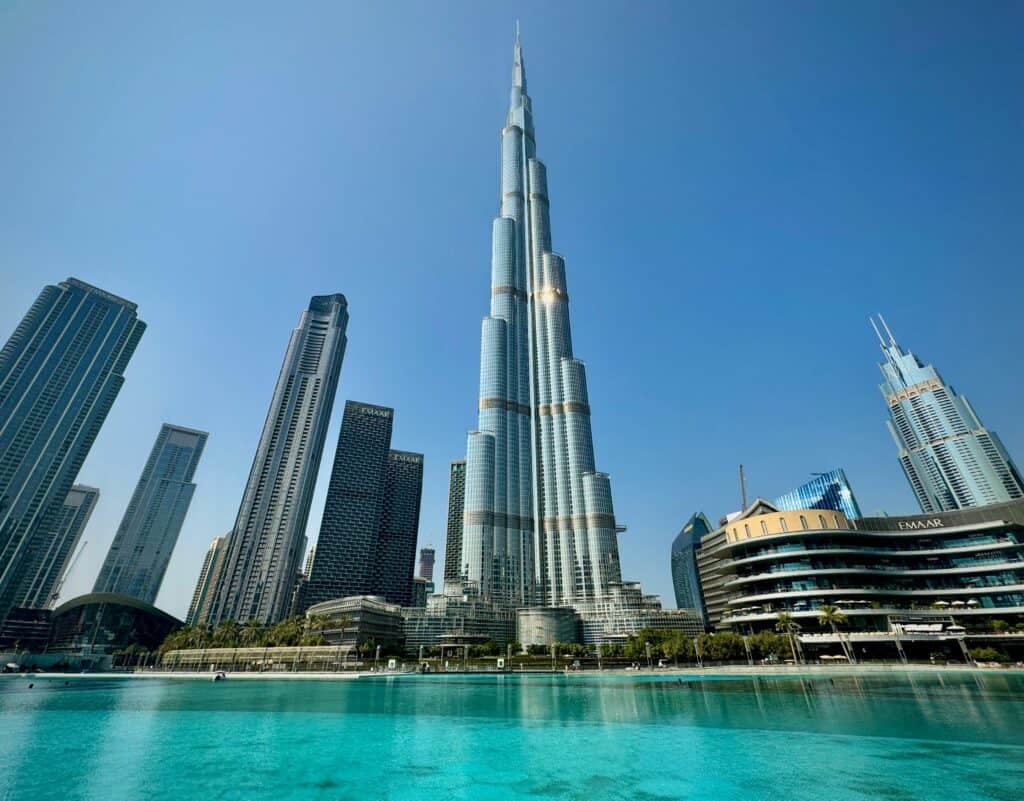
Dubai free zone companies (FZE = single shareholder) require at least one shareholder/member. Director residency requirements vary by free zone. Nominee director services are available through registered agents, and no local residency is mandated for ownership.
Audit and accounting obligations
| Compliance item | Dubai FZE | Singapore Pte Ltd | Hong Kong Limited |
|---|---|---|---|
| Annual accounts | Required; FZ rules vary | Statutory accounts required | Financial statements required |
| Statutory audit | Required above FZ threshold | Exempt if small company (2 of 3: revenue ≤S$10M, assets ≤S$10M, ≤50 employees, 2 consecutive years) | Mandatory for all non-dormant companies; no blanket revenue exemption |
| Filing frequency | Annual (FZ-specific rules) | Annual (IRAS + ACRA) | Annual (IRD + Companies Registry) |
| Transfer pricing docs | Required; CT Law Articles 34-36 | Mandatory above S$10M revenue + per-category thresholds | Category-specific thresholds (DIPN 58) |
One point I advise founders on repeatedly: Hong Kong has no blanket audit exemption based on revenue. Small private companies meeting two of three criteria (revenue up to HKD 100 million, assets up to HKD 100 million, up to 100 employees) qualify only for simplified financial reporting standards, not an audit waiver. Every non-dormant Hong Kong company requires an audit. This is a material cost difference versus Singapore, where a genuine small company can avoid statutory audit entirely.
Residency, work visas, and founder lifestyle pathways
Employment pass and visa pathways for founders
The Dubai vs Singapore vs Hong Kong choice frequently comes down to where the founder wants to live, and the visa mechanics matter as much as the tax rates.

Singapore’s Employment Pass requires a minimum fixed monthly salary of S$5,600 (S$6,200 for financial services roles) as of January 2025, plus a passing score under the COMPASS points-based framework, per the Ministry of Manpower. The Employment Pass pathway for founders is available from day one of incorporation (no minimum company age), but the sponsoring entity should have paid-up capital covering at least 12 months of the applicant’s gross salary. Budget 2026 announced an increase to S$6,000 (S$6,600 for financial services) effective 1 January 2027.
Dubai offers an investor visa and freelance visa linked to business ownership or a free zone license. Neither requires a minimum bank deposit. The license and permit fees for free zone setups run AED 7,500 to AED 20,000 depending on the free zone, which is the actual cost being quoted when advisors mention “visa costs.” For longer-term residency, the Golden Visa investor pathway requires AED 2 million in qualifying investment (property, accredited investment fund, or business capital), per the UAE Government Portal. The Dubai residency visa process for entrepreneurs involves the FZ license as the anchor document, not a standalone visa application.
Hong Kong’s employment visa is tied to a specific job offer. For founders without a local corporate vehicle, the process is more complex than Dubai or Singapore.
Tax residency and personal income tax
UAE individual tax residency under Cabinet Decision 85/2022 (effective 1 March 2023) operates on three alternative tracks: (1) physical presence of 183 days or more in any consecutive 12-month period, (2) 90 days or more with UAE nationality/residence permit/GCC nationality plus permanent residence or employment in the UAE, or (3) the UAE as your usual or primary place of residence and centre of financial and personal interests, with no day-count minimum. Meeting any one track qualifies. There is no personal income tax on employment income or dividends in the UAE, per the FTA VAT overview.
Singapore tax residents (ordinarily resident, present 183 or more days) pay progressive personal income tax on Singapore-sourced income, with foreign-sourced income received in Singapore exempt in most cases under IRAS administrative concession for individuals. The top marginal rate is 24% on chargeable income above S$1 million. For a founder drawing a S$5,600 salary, the effective personal tax burden is modest.
Hong Kong salaries tax runs on progressive rates up to 17%, with a standard rate cap of 15% on net income up to HKD 5 million and 16% on net income above that threshold (since the 2024/25 assessment year). Capital gains and dividends are not taxed at the personal level.
Physical presence for QFZP and substance purposes
For Dubai, the tax benefit depends not on the founder’s personal presence but on the company’s substance within the free zone. A QFZP must conduct qualifying activities within the free zone, maintain adequate assets, employ qualifying staff, and incur qualifying operating expenditure there. Non-qualifying income (income from mainland UAE transactions or income failing the QFZP conditions) loses the 0% rate. The de minimis rule under Cabinet Decision No. 100 of 2023 allows non-qualifying revenue up to 5% of total revenue or AED 5 million, whichever is lower. Breaching it costs QFZP status for the current period and the next four tax periods, per the FTA free zones corporate tax guidance.
The substance requirements across Singapore, Hong Kong, and Dubai diverge in how they are enforced: Singapore focuses on decision-making location and transfer pricing arm’s-length tests; Hong Kong applies an operations-based sourcing analysis; Dubai enforces activity and staffing conditions at the free zone entity level.
Banking, payment processing, and financial operations
Account opening: non-resident access
| Banking criterion | Dubai FZE | Singapore Pte Ltd | Hong Kong Limited |
|---|---|---|---|
| Non-resident account access | Moderate; FZ license helps | Tighter post-AML/CFT; local director presence often required | Relatively open; improving with e-KYC |
| Typical documentation | Visa copy, POA, business plan, source of funds | Board resolution, director ID, business plan | Corporate docs, beneficial ownership declaration |
| Remittance controls | None | None | None |
| Profit repatriation | Unrestricted | Unrestricted (no dividend WHT) | Unrestricted |
None of the three jurisdictions impose remittance controls or restrict profit repatriation, which is a meaningful advantage over most emerging market structures. The friction is in account opening, not profit extraction.

For non-resident founders operating remotely, fintech infrastructure has changed the calculus significantly. A Singapore Pte Ltd can open a functional Wise Business account and an Airwallex account without requiring in-person branch visits, though major local banks (DBS, OCBC, UOB) still prefer the local director to appear in person. The detailed mechanics of opening business bank accounts in Singapore and Hong Kong as a non-resident involve different document stacks for each bank, and the process has become more document-intensive since 2022.
For Dubai free zone accounts, the norm is to require a physical visit or a power of attorney, plus a source of funds declaration. Emirates NBD and Mashreq have improved their digital onboarding for FZ entities, but the personal visit requirement remains the norm at most institutions.
Substance, economic reality, and tax authority risk
BEPS compliance, transfer pricing, and audit exposure
The Dubai vs Singapore vs Hong Kong comparison on substance and BEPS risk is where many founders underestimate their exposure.
Singapore has adopted Base Erosion and Profit Shifting (BEPS) Actions 4 through 15. Transfer pricing documentation is mandatory under Section 34F when gross annual revenue exceeds S$10 million and per-category transaction thresholds are exceeded (S$2 million per category for services, royalties, guarantees, and leases from YA 2026, raised from S$1 million; S$15 million for goods). The related-party transaction reporting form is required when total related-party transactions exceed S$15 million in aggregate. IRAS audits on transfer pricing have increased in frequency, particularly for intragroup service fees and IP licensing arrangements.
Hong Kong’s territorial system creates lower headline audit risk if income is demonstrably offshore. The IRD’s “operations test” asks where the profit-generating activities actually took place. For a pure service business with no Hong Kong clients and no Hong Kong-based employees doing the billable work, the offshore claim is relatively clean. Hong Kong’s transfer pricing local file thresholds under DIPN 58 are category-specific: HKD 220 million for property transfers (excluding financial assets and intangibles), HKD 110 million for financial assets, HKD 110 million for intangibles, and HKD 44 million for other transactions. Hong Kong has concluded 57 double taxation agreements as of March 2026, per the IRD.
The UAE’s CT Law Articles 34 through 36 require transfer pricing to follow arm’s-length principles. The FTA published its Advance Pricing Agreement guidance (CTGAPA1) on 30 December 2025, formally establishing a unilateral APA programme effective from that date (fee: AED 30,000 per UAPA application). Cross-border UAPAs are expected to commence during 2026. For a QFZP, the substance rules under the qualifying free zone framework function as a proxy audit: if the FTA finds the entity lacks genuine FZ operations, QFZP status is revoked and the entity faces 9% on all income for the affected period plus the next four tax periods.
CRS, FATCA, and automatic information exchange
All three jurisdictions are Common Reporting Standard (CRS) and Foreign Account Tax Compliance Act (FATCA) compliant. Automatic exchange of financial account information means that a founder’s home tax authority receives reporting on their Dubai FZE, Singapore Pte Ltd, or Hong Kong Limited regardless of local secrecy norms. Anyone structuring on the assumption that information stays contained within the jurisdiction of incorporation is working from outdated assumptions. The tax residency decision framework for globally mobile founders has to account for CRS as a baseline, not an exception.
Decision matrix: which jurisdiction for your business model?
The Dubai vs Singapore vs Hong Kong selection depends on four variables: where your income originates, where you want to live, your revenue scale, and your tolerance for compliance complexity.

Service businesses (software, consulting, digital marketing) with mostly foreign clients. Hong Kong is the cleaner structural choice here. The offshore profits exemption under the territorial regime means a genuine service business with no Hong Kong clients and no Hong Kong-based delivery can legitimately exempt all profits from tax. The 0% effective rate beats both Singapore’s 17% (even after SUTE) and Dubai’s QFZP structure for a solo or small-team service operator who does not need physical FZ presence. The caveat: audit is mandatory, the company secretary must be a Hong Kong resident, and the IRD will scrutinize the sourcing claim if revenue grows.
Trading, distribution, or regional hub operations. Dubai QFZP is strongest here if operations are located within the free zone, since 0% on qualifying income is unmatched. Singapore’s position as the ASEAN gateway and its treaty network (with double tax agreements across the region) makes it the better choice for businesses that need regional substance, ACRA-registered contracts, and the credibility that a Singapore Pte Ltd provides with institutional counterparties.
Holding company or investment portfolio. Hong Kong wins on structure: no capital gains tax, no dividend tax, no withholding on distributions, and a clean offshore exemption for non-Hong Kong investments. The administrative burden is the lowest of the three for a passive holding entity, provided the audit requirement is budgeted for.
Startup with founder relocating. Singapore and Dubai both offer direct pathways. Singapore’s Employment Pass connects directly to incorporation: a founder can incorporate, pay up capital, and immediately apply for an EP (no minimum company age required). Dubai’s investor/freelancer visa connects to the FZ license. Singapore wins on institutional infrastructure and banking access. Dubai wins on zero personal income tax and lower cost of living for some founders. For most founders choosing between the two, the deciding variable is where their clients and team are located, not the tax rate differential.
For founders who have previously reviewed a US LLC as a third option, the structural comparison in the LLC vs Singapore Pte Ltd vs Dubai FZE guide covers the pass-through taxation mechanics that make a US entity behave differently from any of these three corporate structures.
FAQ
What is the true effective tax rate for a service business with 80% foreign revenue in each jurisdiction?
For Hong Kong: if the 80% foreign revenue passes the operations test as offshore income, the effective rate on that income is 0%. The remaining 20% faces 8.25% on the first HKD 2 million. Dubai QFZP: the qualifying vs non-qualifying income classification determines everything. If the foreign service revenue qualifies under the QFZP framework and the entity has genuine FZ substance, 0% applies to qualifying income. Singapore at 17% headline with SUTE reduces effective tax to approximately 4.25% on the first S$100,000 and 8.5% on the next S$100,000 in years one through three. After SUTE, PTE provides ongoing partial relief but at a much smaller scale; the effective rate approaches 17% as revenue grows.
How do substance rules differ when a founder is non-resident?
Dubai is the most exposed: QFZP status requires genuine operations in the free zone, which a non-resident founder running the business remotely from another country cannot satisfy without hired staff and physical assets in the FZ. Singapore’s EP and control-and-management rules mean a non-resident founder who is not present in Singapore cannot satisfy the tax residency test for SUTE (which requires Singapore tax residency of the company). Hong Kong is the most permissive: no personal residency requirement, and the sourcing analysis focuses on where activities took place, not where the owner lives.
Can a single founder own and operate a company in each jurisdiction without a local director?
No, not in Singapore. At least one ordinarily resident director is legally required, and since June 2025, nominee appointments must go through ACRA-registered CSPs. Hong Kong does not require a resident director (only a resident company secretary). Dubai FZEs can have a sole non-resident director in most free zones.
Which jurisdiction has the fastest banking account setup for a non-resident business owner?
In the Dubai vs Singapore vs Hong Kong banking race, Hong Kong has improved the most through e-KYC initiatives, with some digital banks completing corporate account opening in under a week for straightforward structures. Dubai FZ accounts at certain banks can also move quickly if the FZ license paperwork is clean. Singapore’s major banks remain slower for non-residents due to enhanced due diligence requirements introduced since 2022.
Does a Dubai FZE’s 0% tax rate apply to all income, or only to specific FZ-based operations?
Only to qualifying income as defined under the QFZP framework. Non-qualifying income (mainland UAE transactions, passive income not meeting conditions, or any income if the entity loses QFZP status) is taxed at 9% from the first dirham. The AED 375,000 zero-rate band does not apply to QFZPs on their non-qualifying income. The de minimis threshold under Cabinet Decision No. 100 of 2023 allows non-qualifying revenue up to 5% of total revenue or AED 5 million (whichever is lower) before QFZP status is at risk.
Which jurisdiction has the lowest long-term compliance and accounting costs for a small international business?
Singapore, for companies qualifying for the small company audit exemption (two of three: revenue up to S$10 million, assets up to S$10 million, up to 50 employees for two consecutive financial years). Without a statutory audit requirement, annual compliance costs run S$1,500 to S$4,000 for accounting, tax filing, and company secretarial services combined. Hong Kong’s mandatory audit for all non-dormant companies adds HKD 8,000 to HKD 25,000 per year to the base compliance cost. Dubai FZ compliance costs vary widely by free zone, with DMCC and JAFZA running higher on average than offshore-style free zones.
Sources
- UAE Federal Tax Authority: Corporate tax overview
- UAE Federal Tax Authority: Small Business Relief decision
- UAE Federal Tax Authority: Free zones corporate tax
- IRAS: Corporate income tax rates and exemptions
- ACRA: Incorporating a company in Singapore
- Ministry of Manpower Singapore: Employment Pass eligibility
- Inland Revenue Department Hong Kong: Business profits tax
- Inland Revenue Department Hong Kong: Individual tax overview
- Companies Registry Hong Kong: Incorporation of local companies
- UAE Government Portal: Foreign investment
- Singapore Economic Development Board: Setting up in Singapore
- InvestHK: Company registration and setup


