


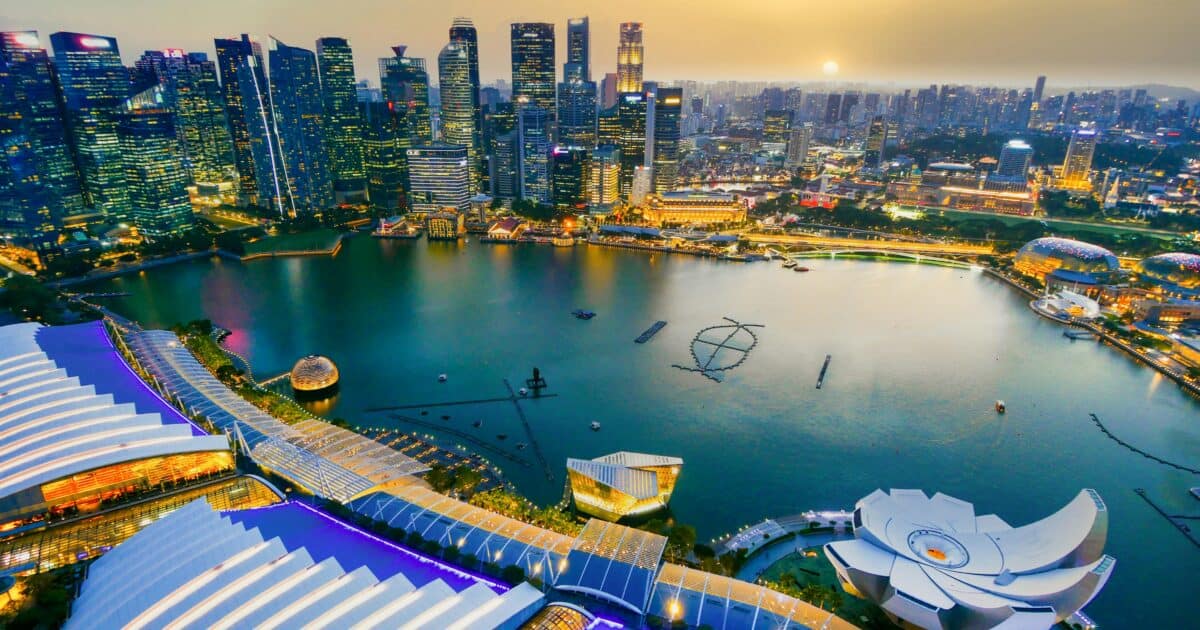
Substance requirements in Singapore have become the single most common reason for holding structures to lose their tax benefits. Hong Kong and Dubai are moving in the same direction. If your company is registered in one of these jurisdictions but operates from somewhere else, the gap between your legal address and your economic reality is exactly what tax authorities are now trained to find.
Tax authorities across Southeast Asia and the Gulf are no longer satisfied with paper structures. If you run a holding company, fund vehicle, or regional operating entity through Singapore, Hong Kong, or Dubai, the question you’ll face in 2026 isn’t whether you have a registered address. It’s whether your company actually does anything there.
Singapore tightened this dramatically with Section 10L of the Income Tax Act 1947, effective from 1 January 2024, which shifts the entire analysis of foreign-sourced capital gains away from the old capital-versus-revenue debate toward a hard-edged substance test. Hong Kong has moved in lockstep with Base Erosion and Profit Shifting (BEPS) alignment under its Foreign-Sourced Income Exemption (FSIE) regime. Dubai free zones continue to offer favorable tax treatment, but regulators and banks have grown more skeptical of entities that exist only on a license certificate.
Economic substance, stripped of the jargon, means this: where are the real decisions made, where does the actual work happen, and where is money being spent to run the business? If the honest answer is “not in the jurisdiction where the company is registered,” you have a substance problem.
The substance requirements Singapore imposes are the most codified of the three, with IRAS advance rulings providing a formal mechanism to get written confirmation of compliance. Hong Kong’s approach is doctrine-based but tightening. Dubai free zones are operationally lighter but carry more reputational and banking risk if substance is thin.
Get the regulatory framework wrong, misjudge any of the three pillars every jurisdiction tests, or skip the compliance groundwork, and the consequences land on the same place: your tax bill.
Understanding economic substance: the BEPS foundation and Singapore’s Section 10L
What economic substance means in the BEPS era
BEPS (Base Erosion and Profit Shifting), the OECD-led project that restructured international tax from 2015 onward, introduced a foundational principle: the legal form of an arrangement cannot determine its tax treatment if the economic reality points elsewhere.
BEPS Action Items 4 and 5 are the most relevant here. Action 5 specifically targets harmful tax practices and requires that preferential regimes be linked to substantial activities. The practical result is that every major jurisdiction now applies some version of a three-part test:
First, management and control: where are the decisions that generate income actually being made? Second, personnel and resources: are qualified people doing real work in the jurisdiction? Third, business expenditure: is money being spent in a way that is proportionate to the claimed activity?
Any structure that fails these tests is, in BEPS terminology, a “letterbox entity.” The legal address is there; the economic reality is elsewhere. That gap is what modern substance rules close.
Substance requirements Singapore: the Section 10L test (2026 update)
Section 10L of the Income Tax Act 1947 applies to gains from disposal of foreign assets by non-Pure Equity Holding Entity (non-PEHE) companies. Before Section 10L, the central question was whether a gain was capital (not taxable) or revenue in nature (taxable). Section 10L replaces that analysis with a substance test for a specific category of companies.
Under Section 10L(16), a non-PEHE company can qualify as an “excluded entity” if it satisfies prescribed economic substance requirements. Excluded entities retain favorable tax treatment on foreign-sourced capital gains. Companies that cannot demonstrate sufficient substance lose that status, and those gains become taxable.
IRAS Advance Ruling Summary No. 3/2026 confirmed that Company A satisfied economic substance requirements under paragraph (b) of the excluded entity definition in Section 10L(16) for the basis period involving a foreign asset disposal. Advance Ruling Summaries No. 2/2026 and No. 5/2026 similarly validated excluded entity status for other companies, establishing a small but growing body of ruling precedent.
IRAS has not prescribed minimum thresholds: no minimum headcount, no minimum revenue percentage, no floor on operating expenses. The assessment is facts-and-circumstances, which gives flexibility but also creates uncertainty. That uncertainty is exactly why advance rulings have become a standard compliance tool for any serious structure.
Comparing BEPS substance tests across jurisdictions
| Substance dimension | Singapore (Section 10L) | Hong Kong (FSIE/BEPS) | Dubai free zone |
|---|---|---|---|
| Primary test | Economic substance (excluded entity status) | Substance over form; FSIE for MNE groups | Physical presence plus business activity |
| Management and control | Board meetings in Singapore; directors present for major decisions | Senior management decisions made in Hong Kong | Local management team required |
| Personnel required | Local employees or credible Singapore-based service providers | Employees in Hong Kong or outsourced to HK providers | Staff physically present in free zone |
| Documentation | Corporate records locally; IRAS advance ruling available | Board minutes, financial records in Hong Kong | Business plan, operational proof, license filings |
| Non-compliance consequence | Excluded entity status lost; capital gains taxed; audit escalation | Gains taxed as business income; IRD inquiry; banking risk | License revocation; tax exemption forfeited |
The three pillars of the substance requirements Singapore enforces (and how they map to Hong Kong and Dubai)
Pillar 1: management and control, where decisions are made
Singapore’s requirement is specific and documentable. Board meetings must be held in Singapore. Directors must be physically present in Singapore when major decisions are made, including disposals, acquisitions, strategy changes, and material contracts. Decisions that are made remotely, delegated entirely to external advisors, or ratified after the fact by directors who were never in Singapore will not satisfy the test.
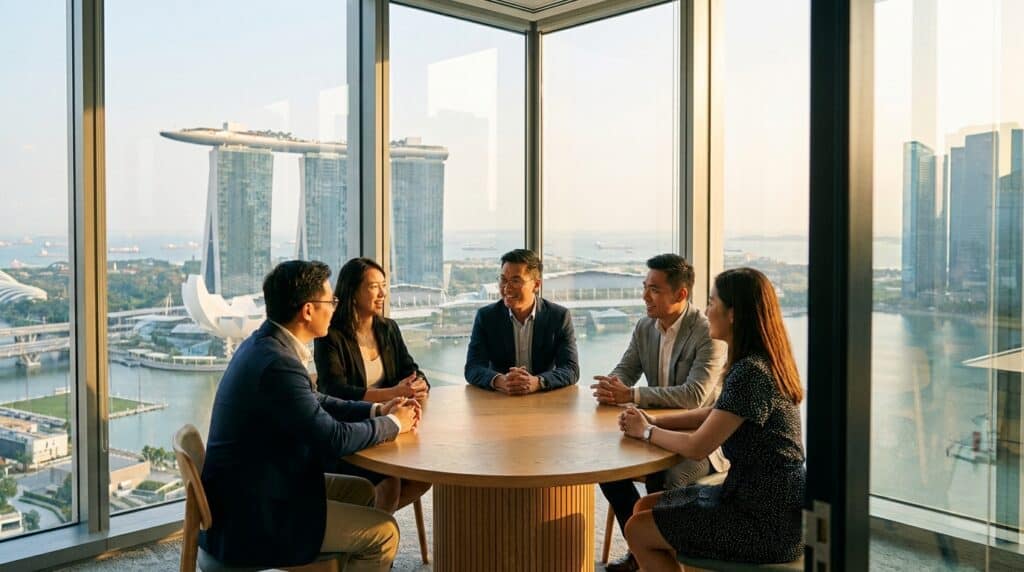
IRAS examines board minutes (dated and location-stamped), meeting attendance records, director residency status, and visa or travel records. A pattern of meetings held “in Singapore” where no director actually traveled there is a red flag that auditors are trained to identify.
Hong Kong’s Inland Revenue Department (IRD) applies a comparable analysis under the substance-over-form doctrine. Senior management decisions must be made in Hong Kong by qualified personnel with genuine oversight authority. The FSIE regime, which applies to members of multinational enterprise (MNE) groups, requires that the economic nexus between the income and the jurisdiction be real, not constructed.
Dubai free zones are less formalized on governance. The requirement is more operational: a physical office, a local management presence, and demonstrable business activity. Formal board structure is less scrutinized, but the absence of any management presence remains a problem. Banks in the DIFC increasingly ask for evidence of commercial activity before opening accounts, regardless of what the free zone license says.
The red flag that appears across all three jurisdictions is the rubber-stamp board: directors who have never visited the jurisdiction, decisions made entirely by a parent company overseas, and board minutes that are generated by a company secretary without any actual meeting. That pattern will end a structure quickly.
Practically, hold at least quarterly board meetings in your chosen jurisdiction, keep contemporaneous attendance logs, and ensure that C-suite personnel travel to Singapore, Hong Kong, or Dubai for any major commercial decision. Document the trip, the agenda, and the outcome.
Pillar 2: personnel and resources, who does the work
Singapore permits outsourcing of core income-generating functions, but the rules on what qualifies are tight. You can use Singapore-based service providers (licensed fund managers, corporate trustees, company secretarial firms) instead of direct employees, but the outsourcing must be to reputable, unrelated third parties. It cannot be to a related party. Service-level agreements must exist, fees must be arm’s-length, and you must retain oversight and control of the functions being outsourced.
Core functions include investment analysis, deal origination, due diligence, asset management decisions, compliance oversight, and financial governance. Administrative tasks alone do not constitute substance. If the only Singapore-based activity is filing annual returns and renewing a company secretary appointment, you do not have substance.
There is no prescribed headcount minimum in Singapore, but IRAS expects the number of people doing real work to be proportionate to the company’s turnover, asset base, and transaction volume. For investment funds, a practical rule of thumb in the market is one full-time equivalent per S$10 million to S$50 million of assets under management, though this varies significantly by strategy and complexity. Operating companies need to demonstrate headcount adequate for their claimed activity.
Documentation requirements are detailed: employment contracts, payroll records, tax filing records for employees, office access records, work product (investment memos, due diligence reports, analysis), and performance reviews.
Hong Kong mirrors this approach. The IRD expects either employees in Hong Kong conducting core activities or outsourcing arrangements with genuine Hong Kong-based service providers that have real oversight and documented deliverables.
Dubai free zone requirements are lighter on structure but still require staff physically present in the zone during business hours. A single full-time employee, supplemented by outsourced specialized functions, can be sufficient for a smaller free zone entity, provided the employee is demonstrably working and payroll records exist.
Pillar 3: business expenditure and operating costs, real money spent
Proportionality between operating costs and business activity is the third pillar. Singapore expects operating expenses (rent, salaries, professional fees, insurance, audit and accounting fees, technology subscriptions, management travel) to align with the scale and complexity of what the company claims to be doing.
What counts: a genuine office lease with a real address (not a virtual office or mail drop), employee salaries paid through Singapore payroll, fees to legitimate third-party service providers, travel costs for directors making decisions in Singapore, and professional fees for compliance and audit.
What does not count: inflated one-off advisory fees designed to create the appearance of expenditure; fees paid to related parties at non-arm’s-length rates without documentation; costs incurred in another jurisdiction attributed to Singapore operations.
The red flag is a company reporting a large asset base or significant transaction volume while spending almost nothing in Singapore to run it. IRAS auditors are trained to calculate implied cost-to-activity ratios, and a 90% gap between scale and cost base is the kind of anomaly that triggers a review.
Hong Kong applies the same logic. Operating costs must align with documented business activities, and the IRD is increasingly skeptical of structures with large balance sheets and negligible local expenses.
Dubai free zone thresholds are lower but not zero. Annual license fees, a real office lease, local staff costs, and documented bank activity form the baseline. The free zone authority will flag dormant or near-dormant entities at license renewal, and banks will independently challenge accounts where no operational expenditure is visible.
Build your operating cost baseline in year one and maintain or grow it. Any significant decrease in operating costs relative to the prior year should have a documented explanation before a tax authority asks for one.
Substance requirements Singapore vs. Dubai free zone and Hong Kong: a comparative structure
Dubai free zone substance model
Dubai free zones (DIFC, JAFZA, DMCC, Dubai Airport Free Zone, and others) do not have a codified economic substance test equivalent to Singapore’s Section 10L. The primary regulatory requirement is a valid business license, a physical office address in the zone, and demonstrable commercial activity.
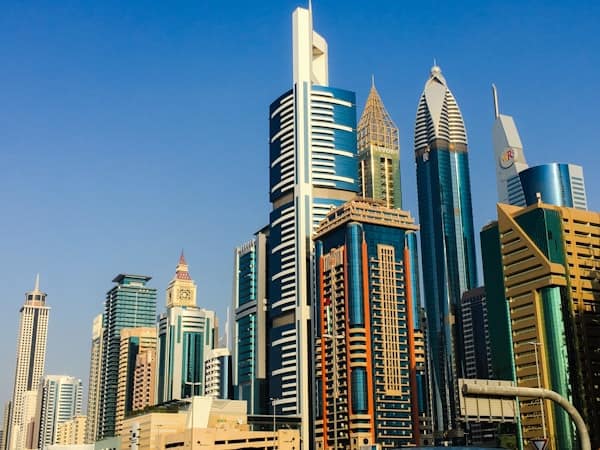
The UAE Federal Tax Authority administers corporate tax at 0% on the first AED 375,000 of taxable income and 9% on the excess above that threshold. Qualifying Free Zone Persons (QFZPs) can access 0% tax on qualifying income, but this status requires that non-qualifying revenue stay within the de minimis threshold established under Cabinet Decision No. 100 of 2023: the lower of 5% of total revenue or AED 5 million. Breaching that threshold causes loss of QFZP status for the current tax period and the following four periods (five years total).
Substance proof for a free zone entity includes a filed business plan, an office lease in the zone name, a UAE bank account with transaction history, invoices and contracts showing actual business activity, and staff records if the company claims local employment.
The practical risk in Dubai is not primarily the free zone authority; it is external. IRAS and the Hong Kong IRD will each apply their own tests to any Singapore or Hong Kong holding structure that points to a Dubai subsidiary. A Dubai entity with a mail-drop presence and no operating activity will not satisfy substance tests in either Singapore or Hong Kong, regardless of what the free zone license states.
Dubai is best suited as a trading hub, regional operating company, or fund platform where genuine commercial activity (client meetings, invoicing, deal execution) happens locally. The tax neutrality is real; the zero-substance model is not viable in a post-BEPS world. For companies in free zones, the UAE corporate tax and QFZP framework sets additional substance requirements that must be met to retain 0% qualifying income treatment.
Hong Kong economic substance (BEPS-aligned, stricter than Dubai)
Hong Kong’s profits tax system is territorial: only Hong Kong-sourced profits are taxable. The standard rate is 16.5%, with a two-tier system that taxes the first HK$2 million of assessable profits at 8.25%. Capital gains are not taxed under general law, but gains from business or trading activities are taxable, and the IRD increasingly scrutinizes whether foreign assets held by Hong Kong companies represent investment or business activity based on actual substance.
Hong Kong’s FSIE regime, which applies to MNE groups, covers four categories of foreign-sourced income: interest, dividends, IP income (including royalties), and disposal gains. Disposal gains were expanded to cover all asset types (not just equity interests) from 1 January 2024. Companies that are not members of MNE groups continue under the traditional territorial source principle without FSIE conditions, but they are still subject to the general substance-over-form doctrine.
The IRD’s ruling system is less formalized than IRAS’s advance ruling mechanism. Rulings are available but take 6 to 12 months in most cases and are more discretionary in outcome. Contemporaneous documentation (board minutes, director residency evidence, office lease, payroll records, transaction documentation, business plans) is the primary defense.
Hong Kong remains a strong base for fund management, private equity, and regional finance hubs where a genuine operational footprint exists. The two-tier profits tax structure is competitive, and Hong Kong’s network of 57 double taxation agreements supports cross-border structures. The caveat is that Hong Kong’s IRD has become demonstrably more aggressive on shell structures since BEPS took effect. Low headline tax rates do not offset the cost of a substance challenge.
Comparative risk and remedy table
| Risk scenario | Singapore (Section 10L) | Hong Kong (BEPS/FSIE) | Dubai free zone |
|---|---|---|---|
| Insufficient management and control | Excluded entity status revoked; capital gains taxed; advance ruling cancelled | Business characterization challenged; gains taxed as business income | License at risk; tax exemption forfeited |
| Lack of personnel or outsourcing issues | IRAS disallows tax benefit; heightened audit risk | IRD disputes substance; full income reassessment possible | Free zone authority may revoke; inability to claim tax neutrality |
| Low operating costs | IRAS questions operations; advance ruling conditions tighten | IRD infers non-genuine business; characterization reversed | Free zone perceives dormancy; license renewal delayed or rejected |
| Remedy pathway | Restructure; reestablish substance; re-file advance ruling | IRD ruling ex-ante; detailed contemporaneous documentation | Increase operating activity; hire local staff; file new business plan |
| Timeline to resolve | 3 to 6 months (restructure and re-file) | 6 to 12 months (IRD ruling) or 2 or more years (litigation) | 1 to 3 months (free zone review); license may be revoked without cure |
IRAS advance rulings: substance requirements Singapore compliance roadmap
The IRAS advance ruling system for substance compliance
An IRAS advance ruling is a formal written confirmation that your company satisfies the economic substance requirements under Section 10L(16) and qualifies as an excluded entity. It is tax-binding for future years unless the facts materially change. For any serious holding or investment structure in Singapore, securing an advance ruling is no longer optional; it is the standard that institutional investors, co-investors, and sophisticated banks expect to see.

The 2026 ruling summaries make this concrete. Advance Ruling Summary No. 3/2026 confirmed excluded entity status for a company disposing of foreign assets. No. 2/2026 and No. 5/2026 provide additional confirmation of the framework IRAS applies. These rulings signal that IRAS is willing to engage substantively with well-prepared applications and will confirm status where the facts support it.
The application process requires a detailed business plan, organizational chart, director CVs, office lease, employment contracts or outsourcing agreements with SLAs, board minutes, bank statements, and prior-year financials. Directors should provide affidavits confirming that substance-creating activities occur in Singapore. The IRAS application fee is S$660 (non-refundable), plus time-based fees of S$165 per hour after the first four hours, and professional advisory (tax counsel and accountant) costs S$5,000 to S$15,000 depending on complexity.
Simple cases take 4 to 8 weeks. Complex multi-jurisdictional structures take 8 to 16 weeks, with IRAS sometimes issuing clarification requests that require a response within 2 to 4 weeks. Per IRAS, rulings cover up to 5 Years of Assessment as a default. IRAS may impose conditions: maintain current personnel levels, hold board meetings in Singapore quarterly, keep records for five years. A breach of those conditions triggers reassessment.
Step-by-step substance compliance roadmap for 2026
Start with an audit of your current state. Map every decision-making function: who decides what, where the decision is physically made, and who the decision-makers are. Document current personnel (employees, contractors, outsourced service providers). Confirm your office setup is a genuine lease with a physical address and real access. Gather your financials: turnover, asset base, transaction volume, and operating costs.
In months two and three, run a gap analysis. Identify what is missing: directors who are never in Singapore, outsourcing to related parties, operating costs that are too low relative to scale, no formal board meeting record. Build a remediation plan with cost estimates and timelines. Hiring staff, securing office space, and establishing arm’s-length service provider contracts take time; start early.
In months three and four, formalize everything. Create a board charter and meeting schedule, and maintain an attendance log from the first meeting forward. Execute employment contracts and payroll records. Document outsourcing arrangements with SLAs and pricing at arm’s-length rates. Assemble your evidence file: lease, utility bills, director passports and visa stamps, bank statements, invoices, a detailed business plan.
In months four and five, engage a tax advisor to draft the advance ruling submission. Prepare affidavits and supporting schedules. Submit to IRAS with all exhibits. Respond to any Q&A rounds promptly.
Post-ruling, treat compliance as a continuous process. Keep board minutes, payroll records, and bank statements current. Notify IRAS of material changes: new shareholders, a shift in business model, relocation of senior personnel. Re-file the advance ruling if the structure changes materially or when the ruling expires.
Common pitfalls that kill IRAS applications
IRAS watches for inconsistency between what the company says it does and what the transaction record shows. A company claiming fund management activities with no fund documents, no due diligence memos, no investment committee records, and no evidence of directors visiting Singapore in two years will have its ruling denied.
Other common failures: all decisions made by a parent company overseas (Singapore entity is purely a recipient); operating costs that are implausibly low for the claimed scale; outsourced functions nominally assigned to a Singapore provider but actually controlled by a related party in another jurisdiction; board minutes generated by the company secretary recording “a meeting” with no substantive agenda or outcomes.
If a ruling is denied, the path back requires 6 to 12 months of genuine substance-building followed by a reapplication that includes evidence of the change. Transparency about prior omissions is more effective than a revised narrative that appears to have been constructed retroactively.
Substance requirements Singapore: risks of non-compliance and strategic mitigation
Tax and regulatory consequences of insufficient substance
In Singapore, the primary consequence of losing excluded entity status under Section 10L is that foreign-sourced capital gains become taxable. Singapore’s corporate tax rate is 17% (or lower for eligible companies claiming the Partial Tax Exemption, which provides a 75% exemption on the first S$10,000 of normal chargeable income and 50% on the next S$190,000, for a maximum annual exemption of S$102,500). For structures with significant capital gains, the exposure on a per-transaction basis can be material.

Beyond the primary tax exposure, IRAS audit escalation is a secondary risk. A Section 10L challenge often opens a broader inquiry into prior-year filings. Penalties run to 5% on the unpaid tax if the full payment is not received by the due date, with an additional 1% per month added (capped at 12%) if payment remains outstanding after 60 days.
Operational risks compound the tax exposure. Thin-substance structures face banking problems: Singapore banks increasingly require evidence of genuine operations before maintaining accounts for companies whose claimed activities are not visible in the account activity. Visa implications for directors are also real; Employment Pass eligibility (minimum S$5,600 per month, or S$6,200 for financial services, as of 1 January 2025) is relevant where directors need valid passes to be physically present for substance purposes.
In Hong Kong, the IRD can reclassify capital gains as business income taxable at 16.5% (or 8.25% on the first HK$2 million). For MNE groups, FSIE non-compliance means the income exemption is lost and profits are subject to full profits tax. The IRD’s investigative process is slower than Singapore’s but the outcomes can be more unpredictable, particularly where the facts do not align with contemporaneous documentation.
In Dubai, the primary risk is license revocation by the free zone authority and loss of QFZP status under UAE corporate tax rules, resulting in the 9% rate applying to income that would otherwise have qualified for 0% treatment.
Strategic mitigation: structuring for genuine substance
The single most effective mitigation is building substance before you need to defend it, not after a challenge has been issued.
For Singapore structures, this means committing to a real Singapore office, Singapore-based personnel or credible outsourced service providers, quarterly board meetings with documented attendance, and an operating cost base that scales with your transaction volume. File for an advance ruling once your substance is established and before your first material transaction. For Hong Kong structures, review the Hong Kong offshore profits exemption process to align your substance documentation with the IRD’s operations test.
For Hong Kong structures, focus on contemporaneous documentation. Every deal decision, every management meeting, every investment committee outcome should be recorded with date, location, and attendees. The IRD cannot challenge what is clearly and contemporaneously documented.
For Dubai, do not confuse a low regulatory threshold with no threshold. Build a visible operating presence: real transactions through the bank account, real invoices, real staff, and a business plan that matches your actual activity. Any co-investor, institutional partner, or bank doing counterparty due diligence will ask for this evidence regardless of what the free zone license says.
The cost of genuine substance (office rent, one or two staff members, outsourced compliance, quarterly travel for board meetings) is modest relative to the tax exposure and reputational risk of a substance challenge. Build it from day one.
Understanding the substance requirements Singapore enforces is important because the consequences extend beyond the immediate tax exposure described above. A company that fails to establish tax residency in Singapore loses access to the country’s network of over 90 DTAs in force and cannot claim benefits under the Start-Up Tax Exemption scheme which requires tax residency for the relevant Year of Assessment. In Hong Kong, a company without genuine substance cannot rely on the territorial source principle or claim FSIE treatment, and its access to Hong Kong’s 57 DTAs becomes questionable.
For group structures, the downstream effects compound: parent jurisdictions may apply controlled foreign company rules to re-attribute income upward, and counterparties in treaty jurisdictions may deny withholding tax relief if the interposed entity lacks substance. These are not theoretical risks. They are the standard consequences that follow when a structure is tested and found empty.
FAQ
What are the substance requirements in Singapore under Section 10L?
The substance requirements Singapore applies under Section 10L of the Income Tax Act 1947 require a non-PEHE company to satisfy economic substance requirements to qualify as an excluded entity and retain favorable tax treatment on foreign-sourced capital gains.
The three core elements are: management and control exercised in Singapore (board meetings held locally, directors present for major decisions), adequate qualified personnel in Singapore or through credible Singapore-based service providers, and business expenditure proportionate to the scale and complexity of operations. IRAS assesses this on facts and circumstances with no prescribed minimum thresholds, and advance rulings (Summaries No. 2, 3, and 5 of 2026) are available to confirm compliance formally.
How does the BEPS substance test apply to Hong Kong companies?
Hong Kong does not have a codified substance test equivalent to Singapore’s Section 10L, but the IRD applies substance-over-form doctrine and BEPS principles across all entity types. For MNE groups, the FSIE regime requires economic substance as a condition for the foreign-sourced income exemption to apply to interest, dividends, IP income, and disposal gains. The IRD assesses whether commercial decisions are made in Hong Kong by qualified personnel, whether business activities occur in the territory, and whether the corporate structure reflects economic reality rather than tax-motivated form.
What counts as substance in a Dubai free zone?
A Dubai free zone entity needs a valid business license, a physical office address within the zone (not a virtual address), demonstrable commercial activity visible in bank records and contracts, and staff records if local employment is claimed. There is no codified economic substance test equivalent to Singapore’s, but Qualifying Free Zone Person status under UAE corporate tax rules (0% on qualifying income) requires that non-qualifying revenue stays within the de minimis threshold under Cabinet Decision No. 100 of 2023: the lower of 5% of total revenue or AED 5 million. Breaching this threshold costs QFZP status for five years.
How do I apply for an IRAS advance ruling on economic substance?
File a detailed application with IRAS that includes a business plan, organizational chart, director CVs, office lease, employment contracts or outsourcing SLAs, board minutes, bank statements, and prior-year financials. Director affidavits confirming Singapore-based activities strengthen the application. Timeline is 4 to 16 weeks depending on complexity. Cost is largely professional advisory fees (S$5,000 to S$15,000 in standard cases). A granted ruling is binding for up to 5 Years of Assessment, subject to conditions and notification of material changes. See the IRAS advance ruling page for the current format and published summaries.
What happens if my Singapore holding company fails the substance test?
Loss of excluded entity status under Section 10L means foreign-sourced capital gains become taxable. Singapore’s corporate rate is 17%, though the Partial Tax Exemption (75% on the first S$10,000 of normal chargeable income, 50% on the next S$190,000) applies to most companies.
Beyond the direct tax exposure, IRAS audit escalation is a secondary risk: a Section 10L challenge often opens a broader inquiry into prior years. Late payment surcharges run to 5% on unpaid tax by the due date, with an additional 1% per month (capped at 12%) if payment remains outstanding after 60 days. In cases of wilful evasion, Part 20 of the Income Tax Act 1947 provides for penalties of up to three times the amount of tax undercharged, fines, and imprisonment. Banking difficulties and visa complications for directors may follow. Recovery requires rebuilding genuine substance and re-filing for advance ruling status after 6 to 12 months.
Sources
- Income Tax Act 1947: Section 10L
- IRAS Advance Ruling Summary No. 2/2026 (Section 10L excluded entity)
- IRAS: e-Tax Guide
- IRAS: Corporate income tax
- UAE Federal Tax Authority: Corporate tax
- Hong Kong Inland Revenue Department: Profits tax
- OECD: BEPS Action 5: harmful tax practices
- UAE Ministry of Finance: Cabinet Decision No. 100 of 2023 (QFZP de minimis)


