


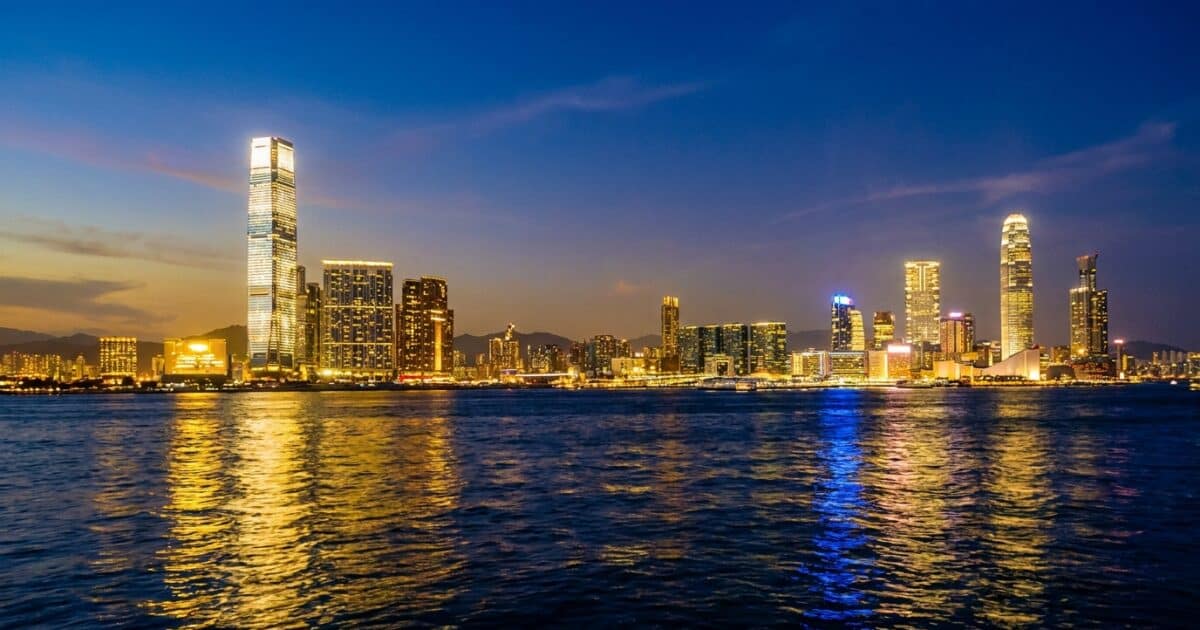
Hong Kong is the only common law jurisdiction with direct access to Mainland China’s 1.4 billion consumer market, a separate legal system, an independent currency, and zero VAT.
The two-tier profits tax (8.25% on the first HK$2 million, 16.5% above) is the number founders notice first, but the structural advantage that keeps them here is geographic: no other city in Asia sits this close to the world’s second-largest economy while operating under English common law and internationally recognized accounting standards.
Why Hong Kong for entrepreneurs still makes sense in 2026
The macro case: stability, surplus, and strategic position
The HK$22.1 billion projected government surplus is not a trivial signal. Compare that to several regional peers running fiscal deficits and you see a jurisdiction with room to invest in its own economy rather than cut services. The 2.5% to 3.5% GDP growth forecast for 2026 places Hong Kong in a solid position relative to mature economies, and the government has backed its confidence with capital: the 2026 budget allocates HK$10 billion to an I&T Industry-Oriented Fund targeting deep-tech, biotech, and advanced manufacturing, alongside a new “Industrialisation Elite Enterprises Nurturing Scheme” for high-growth companies with commercialisation potential.

Hong Kong’s most differentiated structural advantage is geographic. No other common law jurisdiction sits this close to Mainland China’s 1.4 billion consumer market while maintaining a separate legal system, independent currency, and internationally recognized accounting standards. For founders whose business model has any China angle, whether sourcing, distribution, fintech access, or professional services, Hong Kong is not one option among several. It is the structurally correct answer.
Hong Kong vs. Singapore for entrepreneurs: the honest comparison
The Singapore versus Hong Kong debate is real, and I will give you the version that acknowledges both sides rather than the version most formation agents produce.
Singapore wins on perceived political stability, a stronger regional MNC talent base, and a startup ecosystem with more mature Series B+ deal flow. Hong Kong wins on tax rate for early-stage companies (8.25% on the first HK$2 million versus Singapore’s flat 17%, though Singapore’s startup tax exemption partially closes this gap in the first three years), zero VAT versus Singapore’s 9% GST, and unmatched access to Mainland China business flows. I compare all three side by side in the LLC vs Singapore Pte Ltd vs Dubai FZE guide.
| Factor | Hong Kong | Singapore | Dubai (UAE) | Taipei |
|---|---|---|---|---|
| Corporate tax rate | 8.25% / 16.5% | 17% | 9% | 20% |
| Capital gains tax | None | None | None | None |
| VAT / GST | None | 9% GST | 5% VAT | 5% VAT |
| Territorial tax system | Yes | Partial | Yes | No |
| Company formation cost | ~HK$1,500-3,000 | ~SGD 300-500 | ~AED 15,000+ | ~TWD 3,000+ |
| Time to incorporate | 1-3 days | 1-3 days | 3-10 days | 5-10 days |
| Common law legal system | Yes | Yes | Partial | No |
For purely offshore holding structures with no China nexus, Dubai competes effectively. For founders who need China operations, distribution, or capital flows, Hong Kong is structurally irreplaceable.
Business sectors with the strongest 2026 tailwinds
Three sectors stand out. First, fintech and Web3: the Securities and Futures Commission has materially improved regulatory clarity for licensed platforms, making Hong Kong one of very few jurisdictions where compliant crypto businesses can operate with institutional banking access. Second, professional services and consulting: the lowest startup cost of any sector, fastest path to revenue, and no license required beyond a Business Registration Certificate for most service models. Third, AI and deeptech: the 2026-27 Budget allocates HK$50 million specifically to AI application development accessible via approved tech enterprises and tertiary institutions, and the I&T Industry-Oriented Fund co-invests alongside private VCs in qualifying deep-tech plays.
Tax structure: the core advantage for Hong Kong entrepreneurs
Profits tax: the two-tier system explained
The profits tax structure that makes Hong Kong for entrepreneurs competitive operates on a two-tier system confirmed for 2026 by the Inland Revenue Department (IRD): 8.25% on the first HK$2 million of assessable profits, and 16.5% on profits above that threshold. One rule that foreign founders consistently misunderstand: only one entity per group of connected entities qualifies for the lower 8.25% rate. If you run two Hong Kong companies under common control, only one gets the preferential tier.

For the 2025-26 assessment year, the IRD is applying a 100% profits tax rebate capped at HK$3,000, covering approximately 171,000 businesses. The rebate amount is modest, but the policy signals a government posture that is actively supportive of SMEs.
Territorial taxation: the zero-tax scenario unpacked
Hong Kong taxes only profits that arise in or derive from Hong Kong. Income earned from non-Hong Kong sources, where the profit-generating operations occur outside the territory, is not subject to profits tax. A Hong Kong-incorporated company selling consulting services to European or North American clients, with the substantive work performed by the founder while based outside Hong Kong, can legitimately claim offshore status and achieve near-zero profits tax.
This is not automatic. An offshore claim requires an IRD assessment: you file your profits tax return, claim offshore status for the relevant income, and the IRD reviews the facts. The IRD applies an “operations test” to determine where profits arise. You need documentation showing where contracts were negotiated, where services were performed, and where management decisions were made. Get tax counsel before filing an offshore claim for the first time. The full application process and documentation requirements are covered in the guide on Hong Kong offshore profits tax exemption.
The full “no-tax” list for Hong Kong companies: no capital gains tax, no VAT, no GST, no withholding tax on dividends paid to shareholders (resident or non-resident), no estate duty, and no payroll tax on employers.
Pillar Two and FSIE: what large-group founders need to know
Hong Kong is implementing the OECD Pillar Two global minimum tax (15%) for large multinational groups with annual consolidated revenue exceeding EUR 750 million. If you are reading this guide as an early-stage entrepreneur, Pillar Two does not affect you.
The Foreign-Sourced Income Exemption (FSIE) regime is relevant if your Hong Kong company is part of a multinational enterprise group (at least one entity outside the parent’s jurisdiction). Under FSIE, four categories of passive income received in Hong Kong from foreign sources require economic substance in Hong Kong to remain tax-exempt: interest, dividends, IP income (including royalties), and disposal gains (expanded to all asset types from January 2024). Non-MNE companies continue operating under the traditional territorial source principle without FSIE conditions. If you are a solo founder with a single Hong Kong operating company and no related entities offshore, FSIE does not apply to you.
| Tax metric | Rate | Notes |
|---|---|---|
| Profits tax (first HK$2M) | 8.25% | One entity per connected group |
| Profits tax (above HK$2M) | 16.5% | Standard rate |
| Capital gains tax | 0% | None |
| VAT / GST | 0% | None |
| Dividend withholding tax | 0% | Resident and non-resident shareholders |
| Salaries tax (personal, max) | 15% / 16% | 15% on first HK$5M net income; 16% above (since 2024/25) |
| Stamp duty on share transfers | 0.2% | 0.1% each for buyer and seller (reduced from 0.26% in Nov 2023) |
Hong Kong has concluded 57 Comprehensive Double Taxation Agreements (CDTAs) as of March 2026, with approximately 51 in force. The full list is maintained by the IRD.
Business setup for foreign founders
Entity types and which one foreign founders should choose
Three main structures are available for starting business in Hong Kong for entrepreneurs. The private limited company is the default for almost every foreign founder: it limits personal liability, supports equity issuance for fundraising, satisfies most visa sponsorship requirements, and separates your personal and business tax profiles. A branch office requires an existing foreign parent entity and subjects that parent to Hong Kong tax on branch profits. A sole proprietorship carries unlimited personal liability and creates visa complications for non-residents. Unless you have a specific reason to use another structure, incorporate a private limited company.
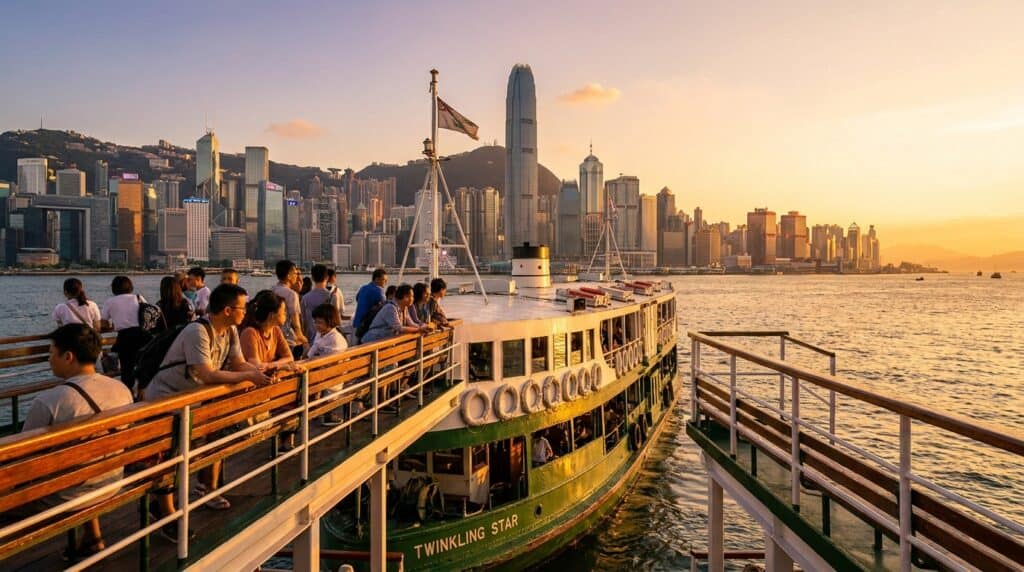
Foreign founders do not need to be Hong Kong residents to own 100% of a Hong Kong company. There is no local shareholder requirement, no minimum paid-up capital requirement, and no restriction on the nationality of directors (though at least one director must be a natural person, and there are practical advantages to having a Hong Kong-resident director for banking purposes).
Incorporation process step-by-step
Step 1: Choose and reserve your company name via the Companies Registry (CR) e-Registry. Names cannot be identical to existing registered companies or contrary to public interest.
Step 2: File incorporation documents online: the NNC1 form and Articles of Association. The government incorporation fee is approximately HK$1,720 (confirm current fee at cr.gov.hk before filing). Incorporation takes 1 to 3 business days via the e-Registry.
Step 3: Appoint a company secretary from day one. This is a legal requirement: the secretary must be either a Hong Kong-resident individual or a licensed corporate secretary firm. Budget HK$3,000 to HK$8,000 per year for a reputable corporate secretary firm.
Step 4: Apply for your Business Registration Certificate (BRC) from the IRD. You can do this concurrently with incorporation via the “one-stop” service. The BRC is mandatory for all businesses operating in Hong Kong.
Step 5: Open a corporate bank account. This is the single biggest friction point for non-resident founders, and the step I recommend starting in parallel with incorporation rather than after it.
The bank account reality: major banks including HSBC, Standard Chartered, and Hang Seng require in-person visits and extensive KYC documentation. Neobanks such as Airwallex, Statrys, and Currenxie offer faster onboarding for newly incorporated foreign-owned companies, often with remote account opening. My recommendation is a two-bank strategy: apply to one traditional bank and one neobank simultaneously. Use the neobank for day-to-day operations while the traditional bank application progresses (2 to 8 weeks). For founders also opening a Singapore account, the guide to business banking in Singapore and Hong Kong covers both markets side by side with document requirements and apostille rules.
Business registration, licenses, and sector-specific requirements
The BRC is mandatory for every business. Beyond that, sector-specific licenses apply depending on your activity. Money service operators (remittance or currency exchange) require an MSO license from the Customs and Excise Department. Food businesses need approval from the Food and Environmental Hygiene Department. Travel agents must register with the Travel Agents Registry. Most pure consulting, e-commerce, or professional services businesses need only the BRC.
| Cost item | Hong Kong | Singapore | Dubai (free zone) | Taipei |
|---|---|---|---|---|
| Government incorporation fee | ~HK$1,720 | ~SGD 315 | ~AED 15,000+ | ~TWD 3,000 |
| Annual company secretary | HK$3,000-8,000/yr | SGD 500-1,500/yr | AED 3,000-6,000/yr | Verify locally |
| Registered address (annual) | HK$2,000-5,000/yr | SGD 200-600/yr | Included in package | Verify locally |
| Accounting/audit (annual, small co.) | HK$8,000-20,000/yr | SGD 2,000-5,000/yr | AED 5,000-15,000/yr | Verify locally |
| Time to full operational status | 2-8 weeks | 2-6 weeks | 4-12 weeks | 4-8 weeks |
Visa pathways: Hong Kong for entrepreneurs
The three viable entrepreneur visa routes
Top Talent Pass Scheme (TTPS): Launched in 2022 and now well-established, the TTPS targets high-earners and graduates from top-ranked universities. It is valid for two years initially with no requirement to have a job offer before arrival. For entrepreneurs with strong academic credentials (graduates of the world’s top 100 universities) or recent annual income exceeding HK$2.5 million, this is the fastest route to legal residency in Hong Kong. Apply via the Immigration Department.

General Employment Policy (GEP) / Investment Visa: The established route for entrepreneurs who do not meet the TTPS criteria. You need a credible business plan, demonstrated capital commitment, and evidence of genuine economic contribution to Hong Kong. There is no formally published minimum investment amount, but approval patterns suggest HK$1 million or more in demonstrable business investment strengthens the application materially. Apply via the Immigration Department.
Quality Migrant Admission Scheme (QMAS): A points-based route that leads to permanent residency after seven years. It is quota-limited and slower than the TTPS, but better suited for founders planning long-term domicile in Hong Kong who want to eventually access full PR rights. Applications are assessed under an Achievement-Based Points Test or General Points Test.
Permanent residency and the 7-year path
Hong Kong permanent residency (Right of Abode) becomes available after seven years of continuous ordinary residence. PR holders face no visa restrictions, can sponsor employees, and access the full suite of government services. One common misconception among offshore-focused founders: holding a BVI or offshore company while living abroad does not count as ordinary residence in Hong Kong. Physical presence in the territory is required. If your goal is eventual PR, you need to be physically here.
Hiring foreign staff: work visa basics
To sponsor international employees, your company uses the GEP route. The practical requirement is demonstrating that the role could not be filled by a local candidate (a labour market test). For specialized tech, AI, or fintech roles, this test is straightforward to satisfy. Founders bringing Mainland Chinese talent specifically should note the Admission Scheme for Mainland Talents and Professionals (ASMTP), which operates as a separate channel with its own quota and application process via the Immigration Department.
VC and funding ecosystem: Hong Kong for entrepreneurs
Active VC funds in Hong Kong (2026)
Hong Kong has a deeper VC ecosystem for entrepreneurs who need external funding than most guides acknowledge. Eight funds worth knowing:

Gobi Partners: Early-stage, Pan-Asia focus. Series A ticket sizes in the USD 2 million to USD 10 million range. Particularly active in fintech and digital health.
Horizons Ventures (Li Ka-shing family office): Growth stage, deep-tech and biotech focus. Larger tickets at USD 10 million and above. Not for seed-stage companies, but a name every deep-tech founder should know.
Cyberport Macro Fund: Government-backed, early-stage tech. Co-invests alongside private VCs. Accessible via Cyberport’s incubation programme.
MindWorks Ventures: Seed to Series A, consumer tech and fintech. Ticket sizes from USD 500,000 to USD 5 million.
Vectr Fintech Partners: Fintech-specialist, seed to Series A. Ticket sizes from USD 250,000 to USD 3 million. One of the most active fintech-focused seed funds in Hong Kong.
Sequoia Capital China: Operates from Hong Kong, targets China-bound tech plays. Series B and above. For founders with a clear China market strategy.
Alibaba Hong Kong Entrepreneurs Fund: Non-profit-oriented, supports Hong Kong and ASEAN startups. Grants and co-investment up to USD 1 million. Accessible to early-stage companies.
InvestHK / HKSTP: Not a VC fund, but both provide funded access to VC introductions, co-working, and government grant programs. HKSTP runs pitch events that serve as warm-introduction channels to the private funds above.
Government co-investment and grant programs
The Innovation and Technology Fund (ITF), the flagship government innovation funding mechanism, co-invests alongside qualified private VCs in deep-tech, biotech, and advanced manufacturing companies. The Industrialisation Elite Enterprises Nurturing Scheme sits alongside it, targeting high-growth companies with commercialisation potential and operated via InvestHK.
For earlier-stage founders, the Cyberport Creative Micro Fund offers seed grants up to HK$100,000 with no equity taken (confirm current amount at cyberport.hk). The Technology Startup Support Scheme for Universities (TSSSU) offers annual grants up to HK$1.5 million per team for university-linked startups. The HK$50 million AI allocation in the 2026-27 Budget is accessible via approved tech enterprises and tertiary institutions for AI application courses, seminars, and development competitions (source: budget.gov.hk).
What investors in Hong Kong actually want to see
Founders should demonstrate either a clear China market angle or a credible global-from-HK strategy. Pure local Hong Kong market plays rarely attract institutional VC at meaningful valuations. Cap table cleanliness matters: the standard VC-backed structure in Hong Kong uses a Cayman Islands holdco above the Hong Kong operating entity, with convertible preferred shares at the Cayman level. Founders structuring their Hong Kong company with related entities in Singapore should also review the substance requirements in Singapore, Hong Kong, and Dubai to ensure both entities independently satisfy their jurisdiction’s economic substance tests. Get this structure right before your first institutional conversation. HKSTP and Cyberport both run pitch events and provide warm introductions to private VCs at no cost to registered companies.
Alternative financing: Hong Kong for entrepreneurs
Government SME lending: the SFGS
The SME Financing Guarantee Scheme (SFGS) is the primary government-backed lending facility for Hong Kong SMEs. The 80% guarantee product has been extended to March 2028, with a total government commitment of HK$310 billion. The mechanics: HKMC Insurance Limited (HKMC) provides an 80% guarantee to participating lenders, allowing SME founders to access bank loans without full collateral coverage. The current list of participating lenders and application process is at hkmc.com.hk.

Revenue-based financing and trade finance
Revenue-based financing (RBF) is available in Hong Kong via Pan-Asia providers including Choco Up and Jenfi. Repayments are tied to monthly revenue, making RBF suitable for e-commerce and SaaS founders who want to avoid equity dilution. Advances are in the range of one to three times monthly revenue, with fees in the 6% to 12% range of capital advanced (verify current terms directly with providers as these fluctuate).
Trade finance is highly accessible given Hong Kong’s position as a trading hub. Invoice factoring and letters of credit are available through HSBC, Standard Chartered, and specialist trade finance firms. If your business model involves importing or exporting physical goods through Hong Kong, trade finance is worth exploring before raising equity.
Convertible notes are standard for pre-seed and seed rounds in Hong Kong. Market convention is an 18 to 24 month maturity, a 20% discount to the Series A price, and valuation caps set at three to five times projected Series A valuation. Being a common law jurisdiction, convertible note documentation is straightforward and well-understood by local counsel.
Employment law and talent: Hong Kong for entrepreneurs
Employment legislation every founder must know
The Employment Ordinance (Cap. 57) is the primary legislation governing all Hong Kong employment. It applies to any employee on a continuous contract (18 or more hours per week for four or more consecutive weeks). Statutory minimums cover annual leave, sick leave, maternity pay, paternity pay, and severance. Founders hiring their first local employee need to know this legislation before signing any employment contract. For founders evaluating whether to hire employees directly or use an EOR, the guide on EOR vs local entity vs contractor covers Hong Kong alongside Singapore and Dubai.

The Minimum Wage Ordinance (Cap. 608) sets the statutory minimum wage. As of the last confirmed review, the statutory minimum wage is HK$43.1 per hour (effective 1 May 2026, increased from HK$42.1). Under the new annual review mechanism, the rate is now reviewed yearly. Verify the current rate at the Labour Department before making any hiring decisions.
The Employees’ Compensation Ordinance (Cap. 282) requires mandatory employer liability insurance for all employees from the first day of employment. Non-compliance carries criminal penalties. First-time employers in Hong Kong regularly overlook this obligation.
Mandatory employer contributions: MPF
The Mandatory Provident Fund (MPF) requires both employer and employee to contribute 5% of the employee’s relevant income per month. The employer contribution is mandatory and cannot be contracted away. Contributions are capped: the maximum employer contribution is HK$1,500 per employee per month, based on a monthly income cap of HK$30,000 (verify the current cap at mpfa.org.hk, as this figure is subject to review). Employers must enrol employees within 60 days of employment commencement.
For foreign employees on short-term contracts under 13 months, or employees covered by an overseas retirement scheme, MPF exemptions may apply. If you are building an expat-heavy founding team, check exemption eligibility before assuming MPF applies to everyone.
ESOP norms, talent competition, and retention
ESOPs are used across Hong Kong-incorporated structures. A four-year vesting schedule with a one-year cliff is market standard. The tax treatment is an important recruitment point: Hong Kong has no capital gains tax, so employees who exercise options and sell shares pay no tax on the capital appreciation. However, Salaries Tax applies to the intrinsic value of options at the point of exercise (the gain on exercise is treated as employment income). Structure your option scheme with tax counsel to manage employee tax liability at exercise.
The primary talent retention challenge in Hong Kong is competition from Singapore-based MNCs offering relocation packages combined with perceived lifestyle stability. Founders who are considering hiring remote workers across borders should also review the guide on permanent establishment risk for international employers, which covers how Hong Kong’s IRD applies the operations test to remote work arrangements. Hong Kong’s structural counters are a 15% personal tax standard rate cap (16% above HK$5 million net income since 2024/25, though few startup founders hit that threshold) versus Singapore’s top marginal rate of 24% for income above SGD 1 million and access to Mainland Chinese talent via the ASMTP scheme. For founders building China-facing teams, Hong Kong’s talent pool is significantly stronger.
Healthcare and family costs: what expat founders actually pay
Expat health insurance costs
Hong Kong operates a dual-tier healthcare system. Public healthcare is highly subsidized but carries long waiting times for non-emergency treatment. Most expat entrepreneurs opt for private coverage from day one.
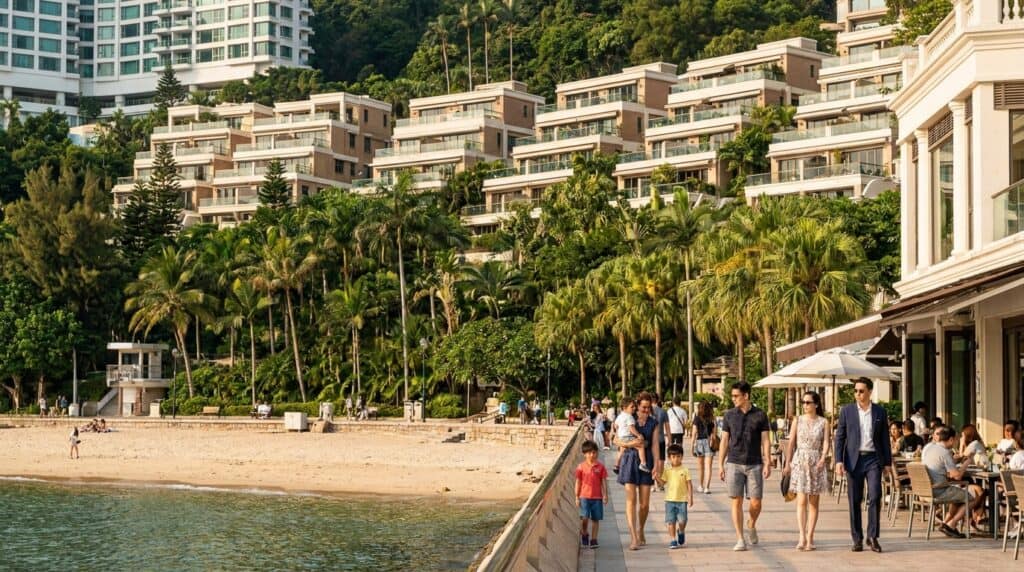
Private health insurance cost ranges for 2026 (verify current rates with providers before purchase):
- Individual plan with outpatient cover: HK$8,000 to HK$18,000 per year
- Family plan (two adults plus two children, comprehensive): HK$30,000 to HK$60,000 per year
Major providers include Cigna, AXA, Bupa, and AIA. All offer group plans for companies with two or more employees, which can reduce per-person cost. Setting up a company group plan at incorporation makes sense: it is a tax-deductible business expense and covers you personally from day one.
International school fees and family relocation costs
International school fees are the largest fixed cost variable for expat families evaluating Hong Kong:
- English Schools Foundation (ESF) and comparable international schools: HK$120,000 to HK$220,000 per year per child
- Premium international schools (French International, American School): up to HK$250,000 per year per child
- One-time application and capital levy fees: HK$30,000 to HK$100,000
These figures should be confirmed directly with specific schools, as fees vary and are reviewed annually.
| Cost item | Hong Kong | Singapore | Dubai | Taipei |
|---|---|---|---|---|
| Grade B office rent (per sqm/month) | ~HK$250-350 (~USD 32-45) | ~SGD 60-90 (~USD 44-66) | ~AED 80-120 (~USD 22-33) | ~TWD 800-1,200 (~USD 25-37) |
| Mid-level tech salary (monthly) | ~HK$25,000-45,000 | ~SGD 5,000-8,000 | ~AED 12,000-20,000 | ~TWD 60,000-90,000 |
| 2-BR expat apartment (monthly) | ~HK$25,000-45,000 | ~SGD 4,500-7,000 | ~AED 8,000-14,000 | ~TWD 30,000-50,000 |
| Corporate tax rate | 8.25% / 16.5% | 17% | 9% | 20% |
| International school (annual/child) | HK$120K-220K | SGD 25K-45K | AED 50K-100K | TWD 300K-500K |
90-day action plan: Hong Kong for entrepreneurs launching in 2026
Phase 1: days 1-30: legal foundation and government registration
The first 30 days of launching in Hong Kong for entrepreneurs follow a predictable sequence. Goal: company incorporated, BRC obtained, bank account applications submitted.

Days 1-3: Decide on entity structure (private limited company for most founders). Engage a licensed company secretary firm; compare at least three providers before committing. Budget HK$3,000 to HK$8,000 per year.
Days 3-7: File incorporation documents via the CR e-Registry. Submit the NNC1 form and Articles of Association. Pay the government incorporation fee (approximately HK$1,720).
Days 7-10: Apply for your BRC via the IRD portal. Use the “one-stop” service to apply for BRC simultaneously with incorporation.
Days 10-20: Submit corporate bank account applications to at least one traditional bank (HSBC or Hang Seng) AND one neobank (Airwallex or Statrys) simultaneously. Prepare your KYC pack: certificate of incorporation, BRC, passport copies, proof of address, and a one-page business plan summary. Do not wait for one bank to reject before applying to another.
Days 20-30: Apply for any sector-specific licenses if applicable. Identify your MPF trustee and set up an employer MPF account before your first hire. Check SFGS eligibility at hkmc.com.hk if you anticipate needing working capital.
Phase 2: days 31-60: visa, funding applications, and team setup
Goal: personal immigration status secured, first funding application submitted, initial hire prepared.
Days 31-40: Submit your visa application (TTPS or GEP Investment Visa) via the Immigration Department portal. Ensure all supporting documents are certified. If using the GEP route, your business plan is the deciding document: make it specific about Hong Kong economic contribution.
Days 40-50: Register with Cyberport or HKSTP incubation programmes if eligible. Submit a Cyberport Creative Micro Fund application if you qualify. Book a free advisory session with InvestHK: they provide market entry support and investor introductions at no cost.
Days 50-60: Engage a Hong Kong tax adviser to assess offshore profits tax claim eligibility for your specific business model. Set up accounting software (Xero is market standard in Hong Kong). Open an IRD employer tax account in preparation for payroll.
Phase 3: days 61-90: operational launch and compliance infrastructure
Goal: fully operational, first compliance obligations mapped, growth roadmap in place.
Days 61-70: Execute employment contracts using Employment Ordinance-compliant templates. Enrol all employees in MPF within 60 days of their start date. Obtain Employees’ Compensation insurance policy before the first employee begins work.
Days 70-80: File for applicable government grants (TSSSU or AI fund applications via approved channels). Connect with HKSTP’s StartmeupHK network for VC introductions. Confirm your neobank account is operational; if the primary bank account is still pending, escalate the application.
Days 80-90: Run your first monthly compliance review: payroll with MPF contributions processed, BRC renewal date noted in your calendar, and first profits tax return deadline confirmed with your tax adviser. Set up a compliance calendar using the table in the next section.
Compliance calendar: Hong Kong for entrepreneurs annual filings
Hong Kong’s compliance load is comparatively light for SMEs. Most founders manage annual obligations with a part-time accountant and a corporate secretary firm. The highest-risk missed deadline for foreign founders is the Annual Return: late filing carries penalties that accumulate from the first day past the 42-day window.

| Compliance item | Governing body | Frequency | Deadline | Portal |
|---|---|---|---|---|
| Profits Tax Return | IRD | Annual | 1 April (standard); extensions available | ird.gov.hk |
| Employer’s Return of Remuneration (BIR56A) | IRD | Annual | By 1 April each year | ird.gov.hk |
| Business Registration Certificate renewal | IRD | Annual | Anniversary of incorporation date | ird.gov.hk |
| Annual Return (NAR1 form) | Companies Registry | Annual | Within 42 days of anniversary date | cr.gov.hk |
| Audited financial statements | Companies Registry / IRD | Annual | Filed with Profits Tax Return | N/A |
| MPF employer contributions | MPF Trustee | Monthly | Last day of each calendar month | Trustee portal |
| Salaries Tax notification (new employee) | IRD | Per hire | Within 3 months of employment start | ird.gov.hk |
| Salaries Tax notification (departing employee) | IRD | Per departure | At least 1 month before departure | ird.gov.hk |
| Stamp duty on share transfers | Stamp Office (IRD) | Per transaction | Within 30 days of transaction | ird.gov.hk |
| Transfer pricing documentation (if applicable) | IRD | Annual | Contemporaneous; filed with Profits Tax Return | ird.gov.hk |
| Employees’ Compensation insurance renewal | Insurance provider | Annual | Before policy lapse | Provider portal |
FAQ
What are Hong Kong’s corporate tax rates for 2026?
Hong Kong uses a two-tier profits tax: 8.25% on the first HK$2 million of assessable profits, and 16.5% on profits above that. Only one entity per connected group qualifies for the 8.25% rate. There is no VAT, no capital gains tax, and no withholding tax on dividends. For the 2025-26 assessment year, the IRD applies a 100% profits tax rebate capped at HK$3,000, covering approximately 171,000 businesses.
Is Hong Kong suitable for non-resident entrepreneurs?
Foreign founders can own 100% of a Hong Kong private limited company without any residency requirement. There is no local shareholder requirement and no minimum paid-up capital. Income earned from non-Hong Kong sources may be exempt from profits tax under the territorial source principle, subject to IRD assessment. The main practical friction point is corporate banking: major banks require in-person visits, so plan for a two-bank strategy using a neobank for faster operational access while the traditional bank application processes.
What government incentives are available for startups in Hong Kong in 2026?
The 2026 incentive landscape includes the HK$10 billion I&T Industry-Oriented Fund (co-investing with private VCs in deep-tech and biotech), the Industrialisation Elite Enterprises Nurturing Scheme for high-growth companies, the Cyberport Creative Micro Fund (seed grants up to HK$100,000 with no equity), TSSSU grants up to HK$1.5 million for university-linked teams, and HK$50 million in AI funding from the 2026-27 Budget. The SFGS loan guarantee scheme has been extended to March 2028 with a total government commitment of HK$310 billion.
How does Hong Kong compare to Singapore for entrepreneurs?
Hong Kong taxes the first HK$2 million of profits at 8.25%, versus Singapore’s flat 17% rate (though Singapore offers a startup tax exemption for the first three years that partially offsets this). Hong Kong charges zero VAT versus Singapore’s 9% GST. Both jurisdictions operate common law systems and impose no capital gains tax. Singapore is perceived as more politically stable and has stronger regional MNC infrastructure. Hong Kong’s advantage is direct access to Mainland China business flows, an irreplaceable structural benefit for any founder with a China market strategy. The compliance burden also differs: Singapore requires an annual return and audited financials above S$10 million revenue, while Hong Kong requires annual audit for all companies regardless of size.
What are the most profitable business sectors in Hong Kong in 2026?
Consulting and professional services carry the lowest startup costs and the fastest path to revenue: a BRC is the only license required for most service models. Fintech benefits from improved regulatory clarity from the Securities and Futures Commission. AI and deeptech are backed by the HK$50 million budget allocation and the HK$10 billion I&T fund. All of this sits within an economy growing at 2.5% to 3.5% in 2026, with a government surplus of HK$22.1 billion signaling continued public investment capacity.
What licenses are required to start a business in Hong Kong?
Every business requires a Business Registration Certificate from the IRD. Regulated industries add sector-specific licenses on top. The BRC alone does not authorize regulated activities.
How long does it take to set up a company in Hong Kong as a foreigner?
Incorporation via the CR e-Registry takes 1 to 3 business days. The BRC can be obtained concurrently, adding minimal delay. The bank account is the bottleneck: traditional banks take 2 to 8 weeks; neobanks can onboard in days to weeks. Full operational status, including bank account and all required registrations, is achievable in 4 to 8 weeks. Starting bank applications simultaneously with incorporation rather than after it is the single most effective way to compress this timeline.
What are the employment obligations for Hong Kong employers?
From the first hire, Hong Kong employers must comply with the Employment Ordinance (Cap. 57) covering statutory leave, sick leave, and severance entitlements. Mandatory employer MPF contributions of 5% of relevant income (capped at HK$1,500 per employee per month) must be processed monthly. Employees’ Compensation insurance is required from day one under the Employees’ Compensation Ordinance (Cap. 282) and non-compliance carries criminal penalties. The statutory minimum wage is now reviewed annually under the mechanism adopted in 2025 and is HK$43.1 per hour from 1 May 2026; check the current rate at the Labour Department before making any offer.
Sources
- IRD Hong Kong: Profits tax rates and two-tier system
- IRD Hong Kong: Double taxation agreements (57 CDTAs as of March 2026)
- Companies Registry Hong Kong: e-Registry incorporation portal
- Hong Kong Immigration Department: Top Talent Pass Scheme
- HKMC Insurance Limited: SME Financing Guarantee Scheme
- Hong Kong Government Budget 2026-27: AI and I&T allocations
- InvestHK: Free market entry advisory services
- MPFA: Mandatory Provident Fund employer obligations
- Labour Department Hong Kong: Minimum wage and Employment Ordinance
- IRD Hong Kong: Business Registration Certificate


