


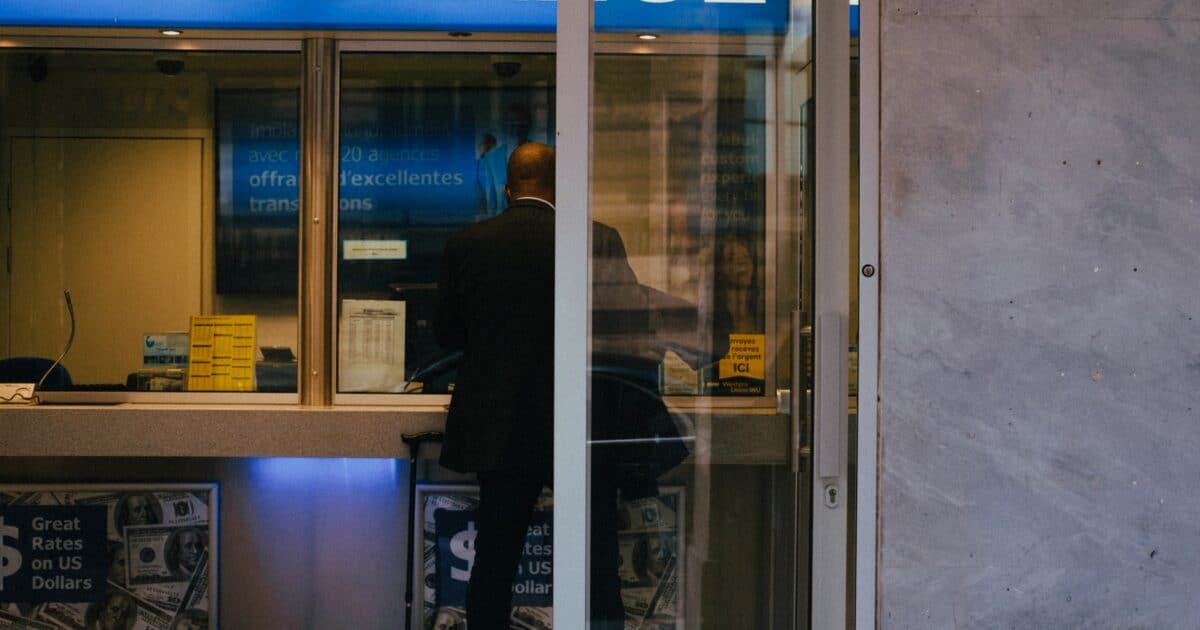
A client with a Singapore Pte Ltd and an existing DBS business account asked me why his business credit card application came back declined. The answer was one line in the eligibility criteria: at least 30% of the company must be owned by Singapore citizens or permanent residents. His structure, 100% foreign-owned, never made it past that screen.
That sequence is more representative than founders expect when they start comparing business credit cards across borders. The barriers are not primarily about creditworthiness or trading history. They are about ownership structure, incorporation type, and, in the United States, whether the applicant holds a U.S. residential address at all.
Singapore, Hong Kong, and the United States each present a different trade-off between accessibility and cost. Singapore’s cards carry the most ownership friction for nonresidents. Hong Kong’s market is more open, with perpetual fee waivers available through at least two major issuers. The U.S. sits at the far end of the restriction scale for foreign business owners, despite offering some of the lowest foreign-exchange costs available.
Singapore business credit cards: eligibility and costs
Incorporation, ownership, and income requirements
The baseline for Singapore issuers is a locally incorporated entity. OCBC accepts sole proprietorships, partnerships, limited liability partnerships (LLPs), and private limited companies incorporated in Singapore, but adds two further conditions: at least 30% of the company must be owned by Singapore citizens or permanent residents, and annual turnover must not exceed S$20 million (as of August 2026). The minimum annual income OCBC states for applicants is S$30,000.

DBS sets a higher personal income bar. The DBS World Business Card requires a minimum annual income of S$80,000 and a minimum applicant age of 21. That threshold tracks the card’s positioning as a product for established operators, not early-stage founders.
The ownership rule is the hardest obstacle for the international founder who has incorporated a Singapore Pte Ltd with no local shareholder. One workaround I have seen clients pursue is bringing in a Singapore citizen or permanent resident as a minority shareholder to meet the 30% threshold, though that introduces governance considerations worth working through with a local corporate secretary before proceeding.
Annual fees and foreign-exchange charges
Annual fees in Singapore vary by issuer and product tier. Standard Chartered Singapore’s Business Platinum Credit Card carries a fee of S$163.50 including 9% Goods and Services Tax (GST), as of September 2026. That is mid-range for the market; premium cards from DBS and Citibank can exceed S$400 per year before waivers.
The foreign-exchange (FX) cost is where variance becomes material. The DBS World Business Card charges 3.25% on foreign-currency transactions, a rate that combines the Visa or Mastercard network conversion component with a DBS administrative fee. On S$200,000 of annual USD-denominated supplier invoices, that comes to S$6,500 in FX costs before any rewards offset. The multi-currency business account alternatives available to Singapore-based companies frequently undercut credit card FX rates substantially for high-volume invoice settlement.
Understanding business credit cards international in Hong Kong and the United States
Hong Kong: banking relationships and fee waivers
Hong Kong’s issuer market is more accessible for nonresidents, but it operates on a banking-relationship model. Every major issuer ties card eligibility to a linked business account at the same institution.

HSBC restricts its Business Mastercard to existing HSBC Commercial Banking customers, with the first two years carrying no annual fee. The structural barrier is the banking relationship itself, which for a newly incorporated Hong Kong company can take months to establish from scratch.
OCBC Hong Kong offers a perpetual annual-fee waiver on its Business Credit Card, with an OCBC Business Account as the eligibility prerequisite. Bank of China Hong Kong takes a similar approach: its Commercial Platinum Card comes with a perpetual annual-fee waiver and adds granular transaction controls, letting the cardholder set limits by category, transaction amount, and cash-advance access.
Standard Chartered Hong Kong’s Smart Credit Card often appears in the same comparisons, but it is a personal card, not a business one. Based on its published key-facts documentation (as of September 2026), annual fees are waived and foreign-currency reimbursement charges are waived under the stated terms, with transactions settling in Hong Kong dollars at Visa’s applicable wholesale-market or mandated rate. Eligibility is limited to Hong Kong residents, so it only helps a founder who already lives in Hong Kong and accepts running company spend through a personal card.
For guidance on what Hong Kong banks require at the account-opening stage, the guide to opening business bank accounts in Singapore and Hong Kong covers the documentation requirements and how the relationship-based process works in practice.
United States: residency restrictions and zero-FX options
The U.S. market for business credit cards international is the most restrictive for foreign entrepreneurs. Bank of America states directly that applicants should be U.S. residents or resident aliens with a U.S. address, and that foreign business clients are not eligible to apply online. That is a hard exclusion for the majority of internationally mobile entrepreneurs operating a U.S. limited liability company (LLC) from outside the country.
Where U.S. cards stand apart is on FX costs, for applicants who do qualify. U.S. Bank’s Business Leverage Visa Signature Rewards Card advertises no foreign-transaction fees on international inventory, supply, or travel expenses. A U.S.-resident entrepreneur operating across Asia who qualifies can run all foreign-currency transactions at zero FX cost, a meaningful advantage over the 3.25% DBS charges on its World Business Card.
On my reading of the U.S. issuer market, the LLC vs. C-corp distinction matters less for card eligibility than the applicant’s physical U.S. address and personal credit history. A Delaware LLC with a foreign sole member almost never qualifies through a standard online application process.
Choosing the right structure: business credit cards international compared
The table below summarizes the main options across all three markets.

| Card / Issuer | Jurisdiction | Annual fee | FX transaction fee | Nonresident eligible? | Business account required? |
|---|---|---|---|---|---|
| OCBC Business Credit Card | Singapore | Varies by product | Varies | No (30% local ownership rule) | Yes |
| DBS World Business Card | Singapore | Premium tier | 3.25% | No (same ownership rule) | Yes |
| SC Singapore Business Platinum | Singapore | S$163.50 (incl. GST) | Market rate | Restricted | Yes |
| HSBC Business Mastercard | Hong Kong | Waived (first 2 years) | Standard rate | Yes (via HSBC Commercial Banking) | Yes (HSBC HK) |
| OCBC HK Business Credit Card | Hong Kong | Perpetual waiver | Standard rate | Yes | Yes (OCBC HK) |
| Bank of China HK Commercial Platinum | Hong Kong | Perpetual waiver | Standard rate | Yes | Yes (BoC HK) |
| SC HK Smart Credit Card (personal card) | Hong Kong | Waived | Waived (FX reimbursement) | No (Hong Kong residents only) | No (personal card) |
| Bank of America (business) | United States | Varies | Standard rate | No (U.S. residents only) | No |
| U.S. Bank Business Leverage | United States | Varies | 0% (international expenses) | No (U.S. residents only) | No |
For a nonresident entrepreneur choosing between these three markets, Hong Kong is the accessible option. The perpetual fee waivers at OCBC HK and Bank of China HK make Hong Kong the default recommendation for companies with an existing local banking relationship. The due-diligence requirements for establishing that relationship are front-loaded, but once the account is active the card application follows relatively straightforwardly.
Singapore works if your structure includes a qualifying local ownership stake. The U.S. works if you hold a U.S. residential address and personal credit history. Outside those conditions, neither market offers a viable path for most internationally mobile founders seeking a business credit card.
FAQ
Can a nonresident entrepreneur obtain a business credit card in Singapore, Hong Kong, or the United States without local residence or a local banking relationship?
Hong Kong offers the clearest path. OCBC HK and Bank of China HK both accept nonresident-owned companies with a linked business account, and neither imposes a local-ownership stake requirement. Singapore effectively requires at least 30% ownership by Singapore citizens or permanent residents, disqualifying most fully foreign-owned structures before any income or revenue check is run. The U.S. is the most restrictive: Bank of America and the majority of major U.S. issuers require a U.S. residential address, making cards inaccessible to entrepreneurs operating exclusively outside the country.
How do foreign-transaction fees, exchange-rate markups, and settlement currencies differ between business credit cards in these three jurisdictions?
DBS Singapore charges 3.25% on foreign-currency transactions. Standard Chartered HK waives FX reimbursement charges on its Smart Card, but that is a personal card open only to Hong Kong residents, not a company card. U.S. Bank’s Business Leverage card advertises zero foreign-transaction fees on international expenses. The spread between 0% and 3.25% is the principal cost variable when selecting a card for a cross-border operation, and it compounds quickly at high invoice volumes.
Does incorporation in Singapore or Hong Kong automatically qualify a company for a business credit card, or do banks also require local ownership, a commercial bank account, or personal guarantees?
Incorporation alone is not sufficient in either jurisdiction. In Singapore, OCBC requires at least 30% local ownership in addition to a Singapore-incorporated entity, plus a minimum annual income of S$30,000 for the applicant. In Hong Kong, every major issuer ties card eligibility to an existing banking relationship with the same institution; without a linked account, the card application has no route forward. Personal guarantees are standard across both markets for companies with a trading history under two years.
Sources
- OCBC: Business credit card eligibility and terms
- DBS: World Business Card
- HSBC Hong Kong: Business Mastercard product page
- Standard Chartered Hong Kong: Smart Credit Card key facts
- U.S. Bank: Business Leverage Visa Signature Rewards Card
- OCBC Hong Kong: Business credit card
- Bank of China (Hong Kong): BOC Commercial Platinum Card
- Bank of America: Business credit cards and applicant eligibility
- IRAS: Stamp duty for buying or acquiring shares


